Say it. The machine obeys.
Nine kids, one bench, and a cardboard car barrier wired to an Arduino that lifts when you ask it to out loud. Then we made the AI guess wrong on purpose — because the useful skill is not asking an AI for things. It’s catching it when it’s confidently wrong.
Most “AI for kids” sessions hand a child a chat box and call the output a project. We ran the day the other way round. The first thing the kids learned was the raw command language the board actually speaks — BARRIER OPEN, HOLD 5, SAFE — typed by hand, twenty-two of them, before anyone was allowed to say a sentence out loud.
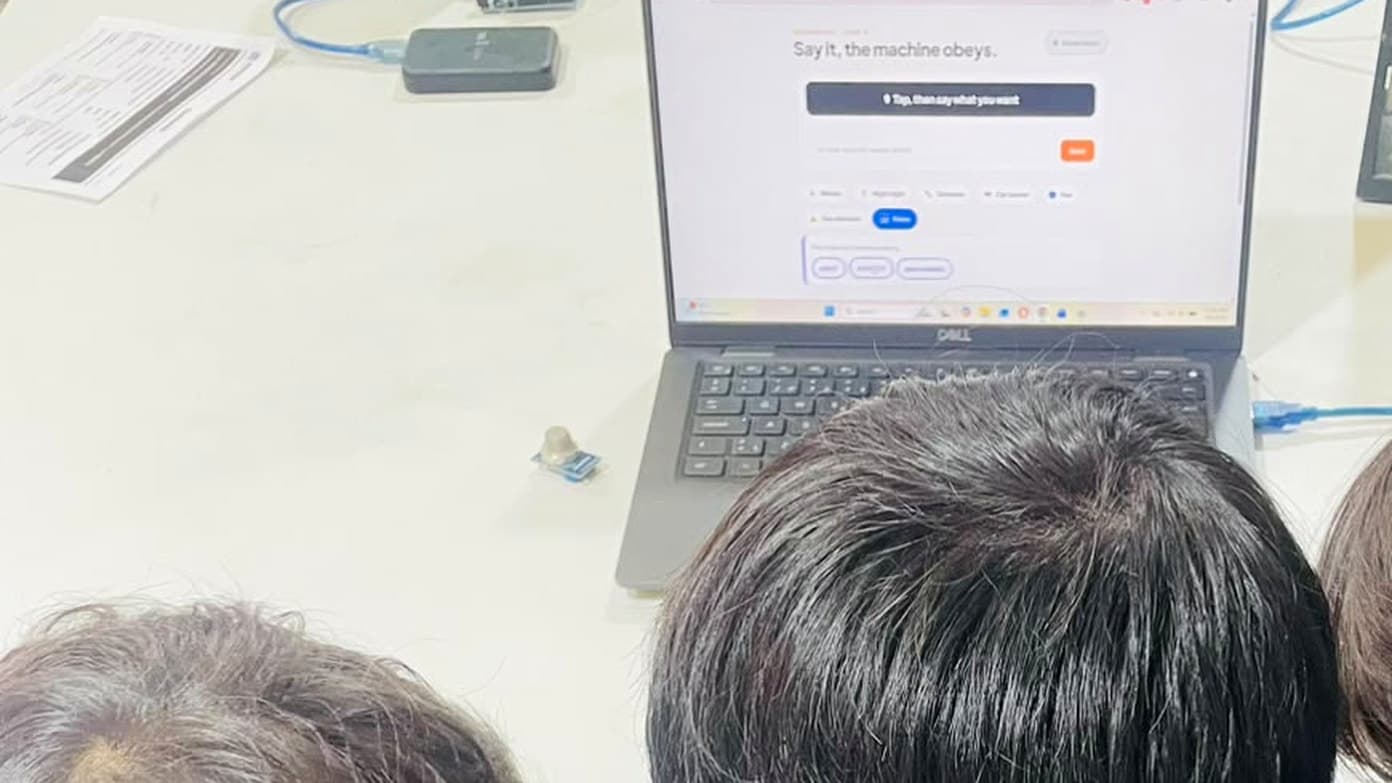
Only then did we turn the microphone on. Now the AI’s job is small and checkable: take a sentence a child says in their own words, pick one command out of a list they already know, and show its work. A kid who has typed BARRIER OPEN can tell instantly whether the AI chose right. A kid who has only ever chatted cannot.
That is the whole of our method in one afternoon: the AI guesses, the machine checks, you judge.
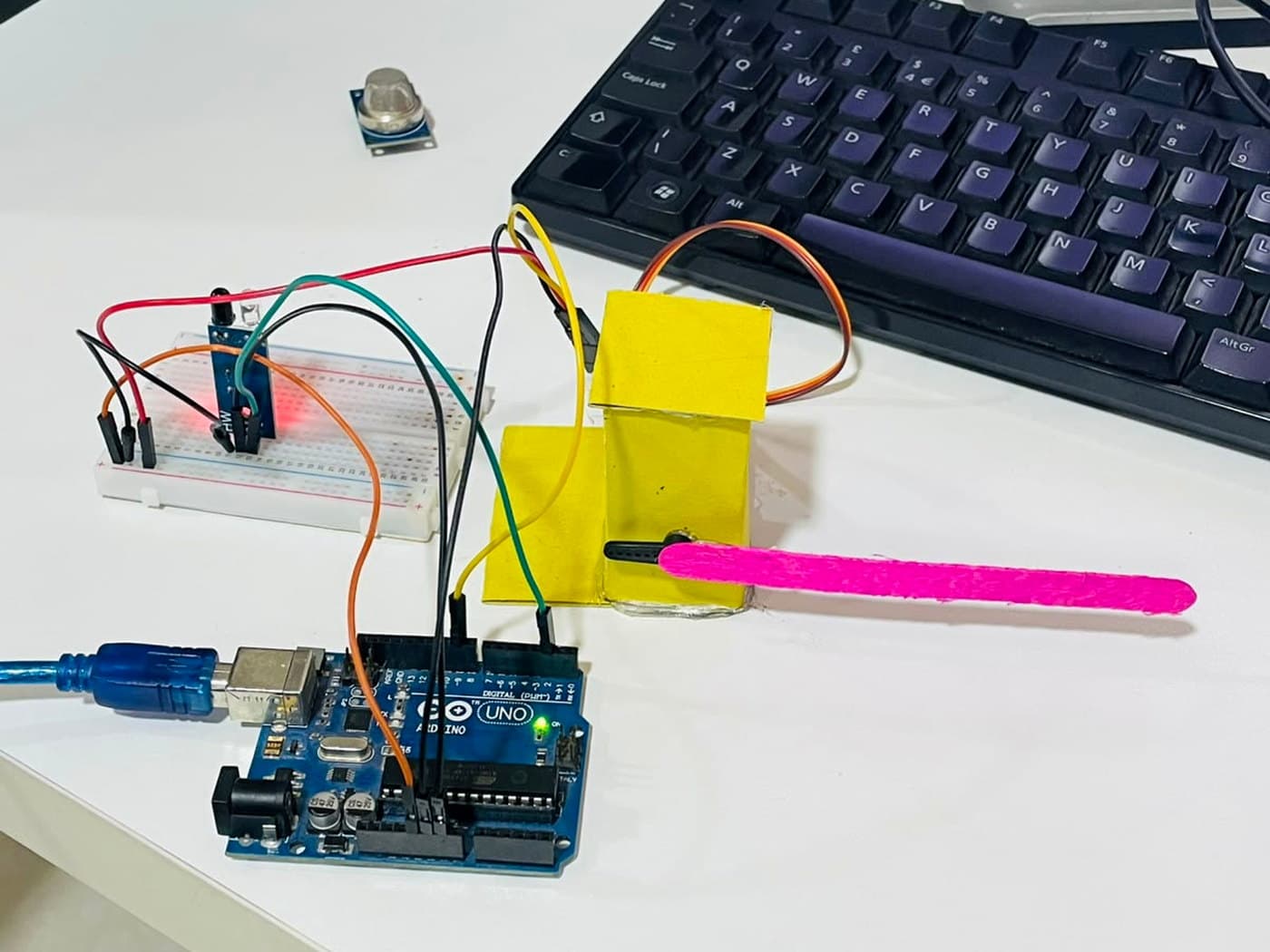
Cardboard, a lolly stick, and a servo.
Six projects share one board and one command list: a night light, a distance meter, a car barrier, a fan, a gas detector and an electronic piano. Saturday ran on the barrier and the gas detector, because both answer back — one moves, one tells you a number.
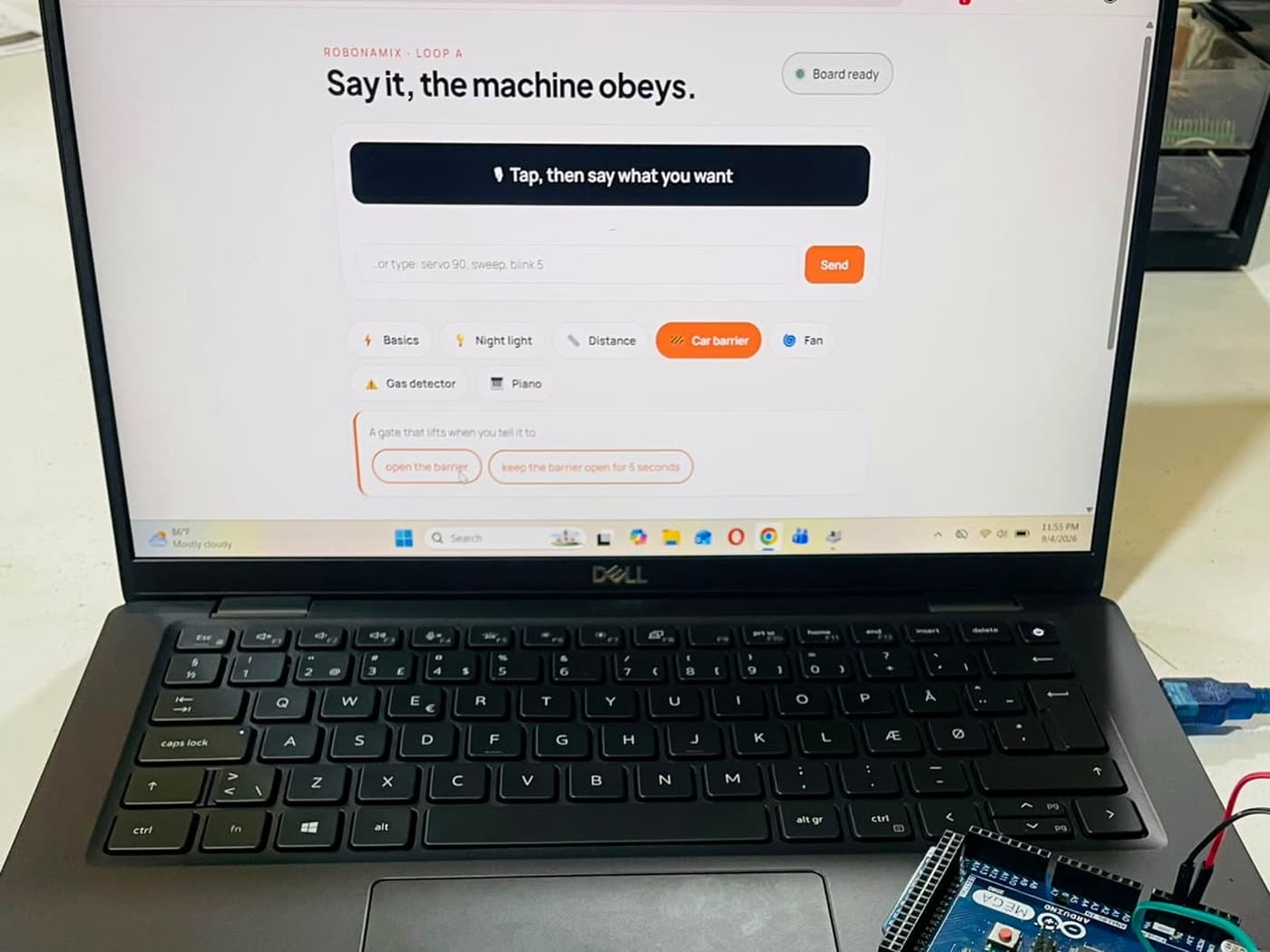
“Open the barrier.”
Said out loud, in a child’s own words. The AI picks BARRIER OPEN out of the list, the board runs it, the servo turns, and the pink lolly stick goes up. Nothing on screen counts until that stick moves.
Three boxes, and no magic left.
Every sentence a child says is shown three times over: what they said, what the AI chose, and what the board sent back. It is the most important thing on the page — the row where a guess stops being a guess.
SAFE; the board answered OK SAFE YES with its gas reading.You said
“open the barrier”
It chose
BARRIER OPEN
board said OK BARRIER OPEN
You said
“keep the barrier open for 5 seconds”
It chose
HOLD 5
board said OK HOLD 5
You said
“is the air safe”
It chose
SAFE
board said OK SAFE YES
Then we made it guess wrong.
A child said
“set the fan to low”
The AI chose
FAN 30
The board said
OK FAN 30
And nothing moved.
No fan was wired to that board. The sentence was reasonable, the command was real, the board said OK — and the only person in the room who noticed was the child watching the log. That is the skill we are actually teaching. Everyone will be able to ask an AI for things. Noticing when it is confidently wrong is the part that keeps its value.
An OK with nothing behind it is worse than an error.
A machine that says OK when nothing happened teaches a child to trust the words on the screen. A machine that says ERR teaches them to look. We would rather ship the honest failure — so the console is built to admit when the board did not answer, instead of smoothing it over.
The list is the leash.
The AI can only pick from the twenty-two commands the firmware will actually run. If it invents something plausible that the board has never heard of, the console refuses it rather than confirming it out loud. A kid who knows the list can audit the AI in one glance — which is the point of learning the list first.
Nobody downloaded these.
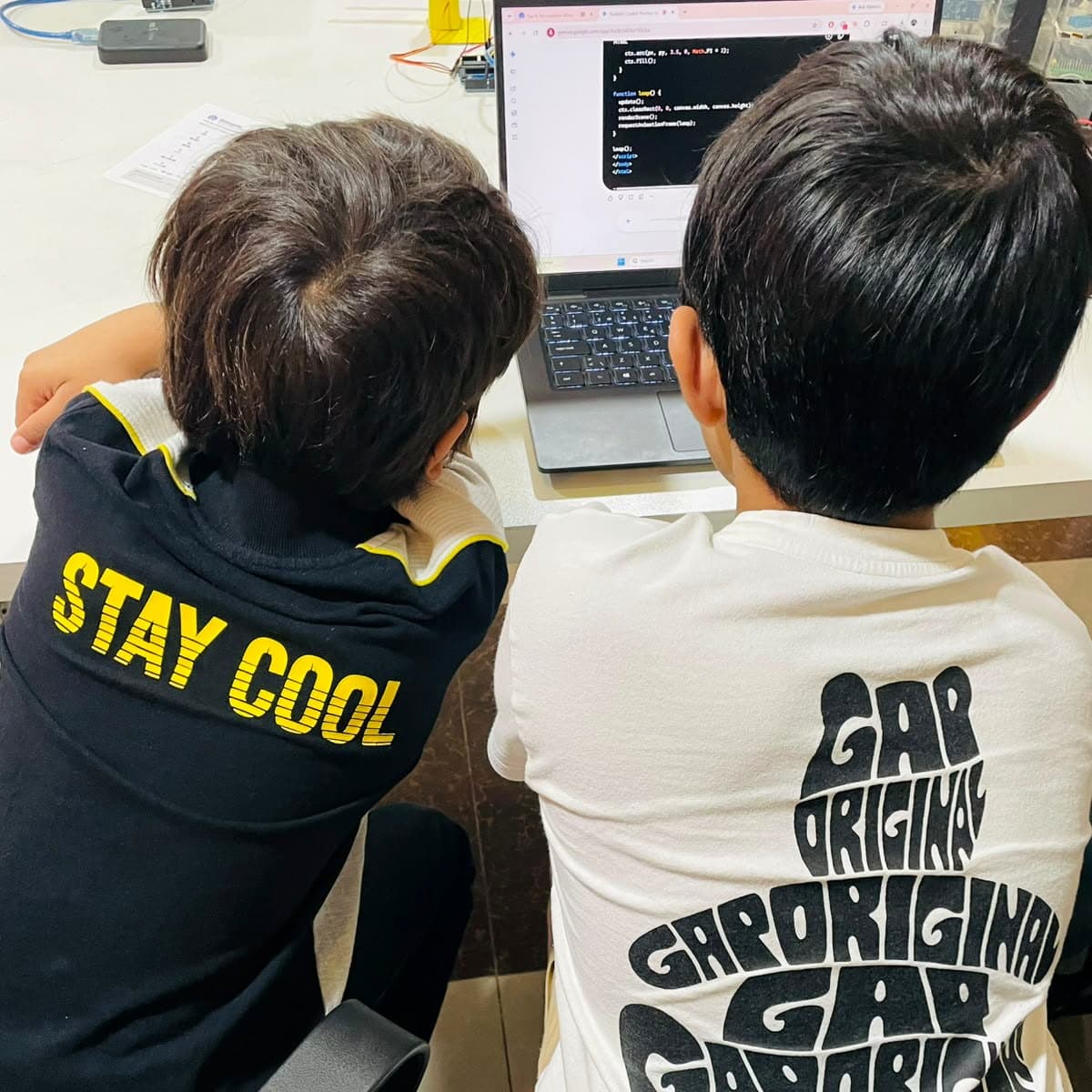
While one table drove the board, another built games — designed by the kid, drafted by the AI one sentence at a time, then debugged by hand when it broke. And it always breaks. Working out why is the entire lesson.
Rex roundup
A cowboy in a mine with a rope, ten runaway dinos to bring home, and a boss with a health bar named Jamal. The writing is the giveaway that no AI wrote this alone — Rex signs off with “Gate stays SHUT. Nobody opens it. Ever.” on the same afternoon the table next to him was opening a gate by asking.
Kilnbreak
A slingshot against pottery kilns: twenty-four of them, twenty-one named — Shelf Life, Chain Gang, The Chimney, Hanging Ware — each scored out of three stars. This run is Hanging Ware, whose brief the game states itself: cut a clear arc and the whole upper rack comes down. It came down at 86.3%.
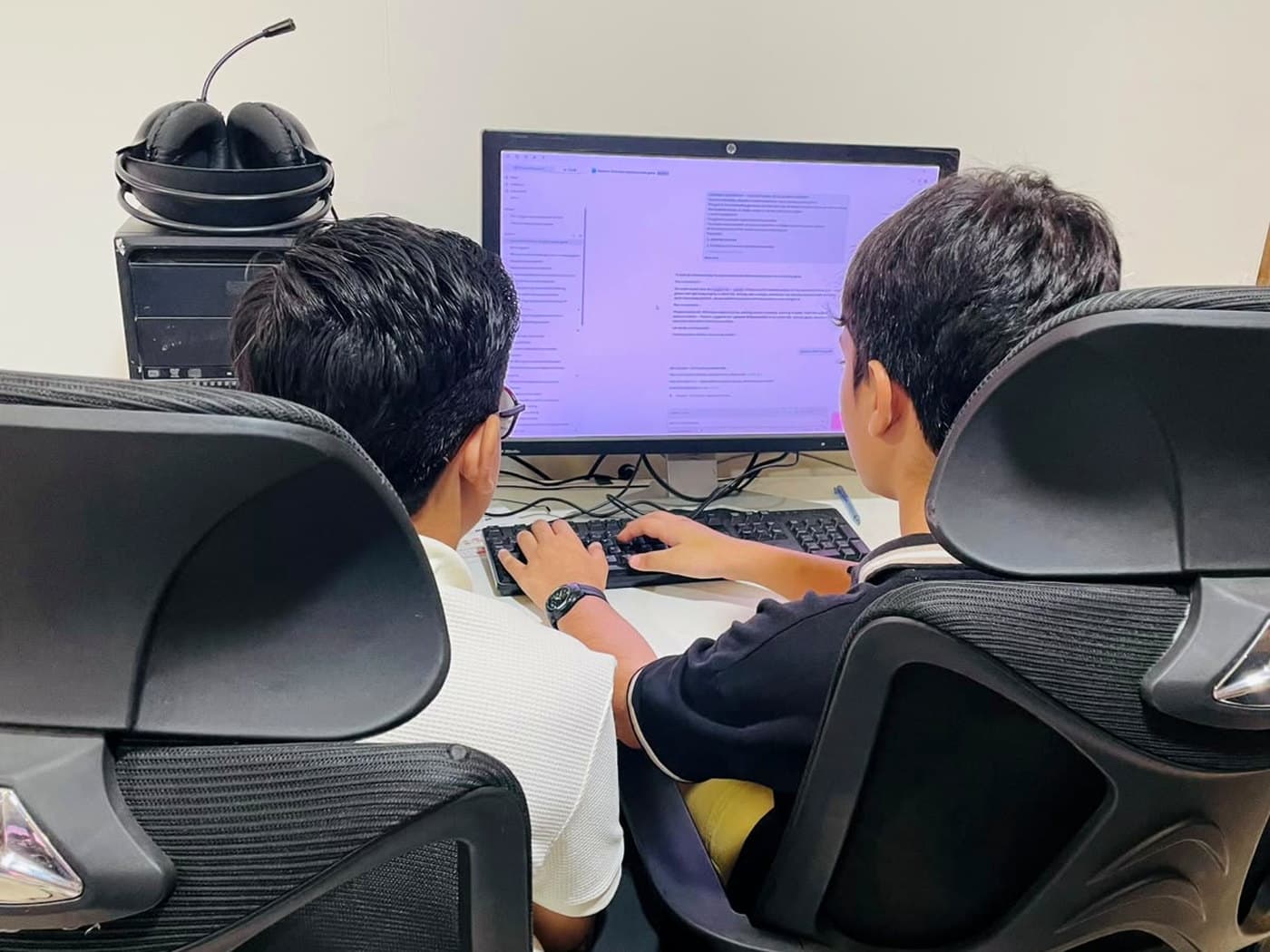
Nine kids, three to a screen.
We photograph our sessions from behind. Every child in these frames is unidentifiable on purpose — no face appears on this site without a signed consent form from a parent, in Urdu, on paper.
Honest notes for next time.
One board was dead, and we found out on the morning.
An Arduino on the bench would not take a sketch — the chip answered the programmer with nothing at all, which is a different fault from a wrong port and takes a different ten minutes to diagnose. It cost us a station. Every board now gets a flash test at the preflight, not a power-LED glance.
The microphone needs a laptop and Chrome.
The console talks to the board over Web Serial, which phones and tablets do not have and Safari does not implement. That is fine in our room and a hard stop for anyone hoping to run it at home on an iPad. We say so up front now instead of discovering it with a parent watching.
We scheduled the wrong-guess moment too late.
The fan that would not spin was the beat the kids talked about afterwards, and it landed near the end. It moves forward: break it early, then spend the rest of the session with children who have already learned to distrust an OK. That is the plan for the next workshop.
Want your kid at the next bench?
Everyone starts with a Rs 3,000 taster — one 3-hour session where your child builds something real and you both see if it fits. Then Rs 15,000/mo if they’re hooked, with each sibling 30% off. Ages 8–17, Bahria Town.
The console is free and needs no board — without one it shows you exactly what it would have sent.
What the fan moment taught the room, written up for parents: The AI said OK. Nothing moved.